Guitar Humidity & Temperature Guide: Acoustic vs Electric vs Bass
Here is my $1 Acoustic Guitar Humidifier Solution.
Here’s My Humidity and Temperature Guide to Surviving Cold and Dry Winters
What humidity and temperature should you keep your guitars and basses in—and does it really differ between acoustics, electrics, and basses? By the way, it’s 7 degrees Fahrenheit outside tonight in January.
This practical guide explains the ideal humidity and temperature ranges for acoustic guitars, electric guitars, and electric basses, and why each reacts differently to dry or cold conditions.
This blog post is geared to the very cold and dry winters experienced in cold regions, like Chicago, IL.
Ideal Humidity and Temperature for All Guitars and Basses
Before comparing instruments, it helps to understand the safe environmental range that applies to all guitars and basses.
Recommended Humidity Range for Guitars
- 40–55% relative humidity (RH)
- 45–50% RH is the ideal target
Recommended Temperature Range for Guitars
- 65–75°F is ideal
- Short-term dips are usually safe if changes are gradual
Sudden changes in humidity or temperature are often more damaging than being slightly outside the ideal range.
Acoustic Guitar Humidity and Temperature Requirements
Acoustic guitars are the most sensitive to environmental conditions.
Why Acoustic Guitars Need More Humidity Control
- Thin solid-wood tops
- Large glued surface areas
- Lightweight internal bracing
- Greater exposure to ambient air
Ideal Humidity for Acoustic Guitars
- 45–50% RH
Ideal Temperature for Acoustic Guitars
- 68–75°F
Problems Caused by Low Humidity in Acoustic Guitars
- Top sinking
- Fret sprout
- Sharp fret ends
- Cracks in the top, back, or sides
- Loose or lifting bridges
Problems Caused by High Humidity in Acoustic Guitars
- Swollen tops
- Higher action
- Dull or muted tone
- Finish issues
Acoustic guitars benefit the most from case storage and dedicated humidification, especially during dry winter months.
Electric Guitar Humidity and Temperature Requirements
Electric guitars are more tolerant of environmental changes but still respond to humidity.
Why Electric Guitars Are Less Sensitive Than Acoustics
- Solid bodies or thick laminated tops
- Fewer large glue joints
- Thicker neck construction
Ideal Humidity for Electric Guitars
- 40–55% RH
Ideal Temperature for Electric Guitars
- 65–75°F
Common Dry-Weather Issues for Electric Guitars
- Fret sprout
- Fingerboard shrinkage
- Neck relief changes
Common High-Humidity Issues for Electric Guitars
- Forward neck bow
- Slightly higher action
Room-level humidity control is usually sufficient for electric guitars.
Electric Bass Humidity and Temperature Requirements
Electric basses are generally the most forgiving, with one important caveat.
Why Electric Basses Tolerate Environmental Changes Better
- Thicker necks
- Heavier construction
- Often multi-piece necks
- Less sensitive to short-term humidity swings
Ideal Humidity for Electric Basses
- 40–55% RH
Ideal Temperature for Electric Basses
- 65–75°F
The One Environmental Issue Bass Players Notice First
- Long necks show relief changes quickly
- Seasonal truss rod adjustments are normal
Common Bass Issues in Dry or Humid Conditions
- Back-bow and buzzing in dry air
- Forward bow and higher action in humid air
Basses rarely suffer structural damage, but neck adjustments are part of normal care.
Guitar Humidity Sensitivity Ranking
From most sensitive to least sensitive:
- Solid-top acoustic guitars
- Hollow and semi-hollow electric guitars
- Solid-body electric guitars
- Electric bass guitars
Best Winter Humidity Strategy for Guitars and Basses
For cold or dry climates, a simple strategy works best.
Recommended Room Conditions
- 45–50% RH
- 60–70°F minimum
Storage Recommendations
- Store acoustic guitars in cases when humidity drops below 40%
- Use room humidifiers for electric guitars and basses
- Monitor conditions with multiple hygrometers
One-Rule Summary for Guitar Humidity and Temperature
Acoustic guitars need protection, electric guitars need monitoring, and bass guitars need occasional adjustment.
Winter and Summer – Guitar Humidity & Temperature Guide: Acoustic vs Electric vs Bass
So that’s some friendly Chicago winter advice for your guitars and basses. I am typing in my basement where the guitars, basses, and Abraham Lincoln books live.
Cold Outside. Outside it’s about 7 degrees Fahrenheit this Chicago night.
Cold in the basement. Currently I am wearing gloves without fingertips for typing. My basement guitar room ranges in temperature from 60 degrees 62 degrees Fahrenheit. Relative humidity is 31 to 42. This is an especially cold night in Chicago. The temperature and humidity range are at the low end of acceptable.
I have three humidifiers running on this horribly dry night. The space heater is set to low. My electric heater will kick in if temperature drops to 55 degrees Fahrenheit by the electric basses.
Perhaps one day I will blog about Chicago summers which are rather humid and hot. But my old house has central AC so the basement is cooler and rarely more humid than 50.
Case or Bag Your Guitars When the Outside is Very Cold and Inside is Very Dry
This is an unusually cold winter where I live. My basement, with heat, is averaging 60 degrees. The humidity can range from a not so good 35 to a slightly better 41.
So even with 3 humidifiers, 1 space heater, and one electric heater I decided to bundle up my guitars and basses in cases/bags. See below.
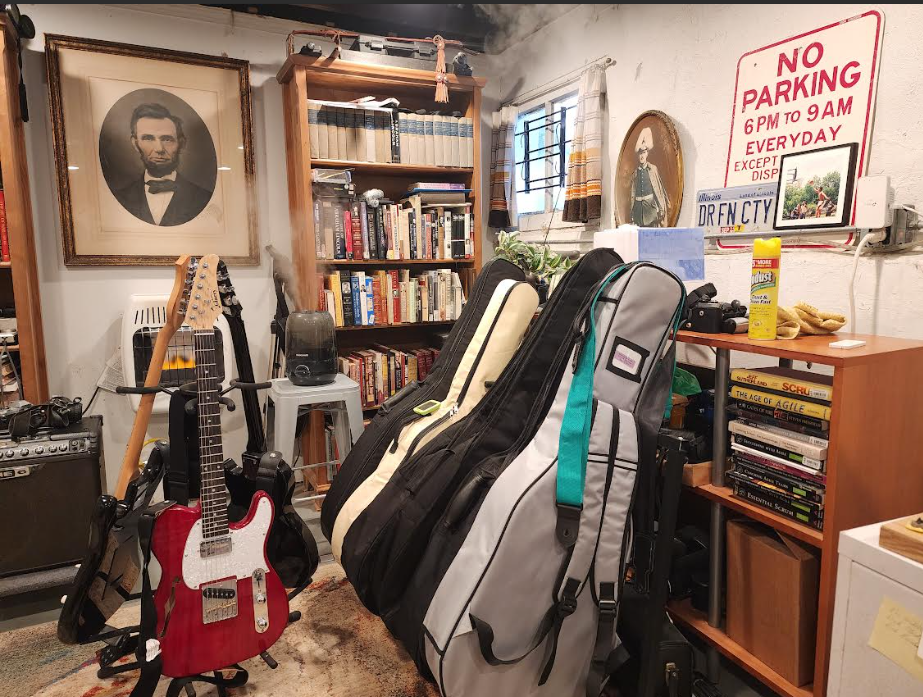
So now, Abraham Lincoln watches over my guitars and basses. He is perhaps wondering when I will read all 100 books in my Lincoln library 🙂
How Do You Protect Your Guitars in a Very Cold and Dry Winter
I love comments. Please leave one 🙂